Is Peking Duck Truly Authentic? Chef’s Review
Peking duck stands as one of the world’s most iconic dishes, a culinary masterpiece that has captivated palates for centuries. Yet when dining at a modern peking restaurant, diners often wonder: am I experiencing the authentic preparation, or a simplified interpretation designed for contemporary tastes? This question deserves serious examination, particularly when considering the rigorous standards that define true Peking duck authenticity.
The journey from Beijing’s imperial kitchens to your local restaurant table involves transformative techniques, specialized ingredients, and uncompromising dedication to craft. After visiting dozens of establishments and consulting with master chefs trained in Beijing’s traditional methods, I’ve developed insights into what separates genuinely authentic Peking duck from well-intentioned approximations. The distinction matters not merely for culinary purists, but for anyone seeking to understand how flavor, texture, and technique converge in this legendary dish.
The Historical Foundation of Peking Duck
Understanding Peking duck’s authenticity requires acknowledging its imperial heritage. This dish emerged during the Ming Dynasty, evolving through centuries of refinement in Beijing’s imperial and aristocratic kitchens. The technique wasn’t simply invented—it was systematically perfected through generations of experimentation, failure, and breakthrough discoveries about how poultry responds to specific preparation methods.
The original preparations demanded access to specialized duck breeds, particular water sources, and climate conditions unique to Beijing. When Peking duck restaurants began spreading internationally during the 20th century, chefs faced an immediate challenge: how to maintain authenticity when operating outside their ingredient ecosystem. Some succeeded brilliantly; others abandoned traditional methods entirely in favor of convenience.
Authentic Peking duck preparation represents a philosophical commitment to technique-first cooking. Unlike many dishes where ingredient substitution merely affects flavor nuance, Peking duck loses its essential character when fundamental preparation steps are omitted. The culinary traditions documented by Chinese cultural institutions emphasize that authenticity encompasses both visible and invisible elements—the structural integrity of skin, the precise moisture content within meat, the oxidation state of rendered fat.
Authenticating the Duck Selection Process
The journey toward authentic Peking duck begins before any knife touches the bird. Traditional preparations specify Peking duck breed—a specific strain developed over centuries in Beijing. These ducks possess particular fat distribution, skin thickness, and meat characteristics that differ measurably from common domestic duck varieties.
A genuine peking restaurant sources birds that meet precise specifications: typically four to five weeks old, weighing between 2.5 to 3.5 kilograms, with fat deposits positioned strategically beneath the skin rather than concentrated internally. This matters profoundly because Peking duck’s signature crispness depends entirely on fat rendering during roasting—and only ducks with proper fat distribution achieve the desired textural contrast between shatteringly crisp exterior and succulent interior.
When restaurants source generic Peking ducks or, worse, substitute common mallard-derived breeds, the biological foundation for authentic preparation collapses. The skin won’t crisp identically. The meat-to-fat ratio won’t balance correctly. Diners experience a dish that mimics Peking duck’s appearance while missing its essential character. Authentic establishments often maintain relationships with specific farms or importers, sometimes traveling to verify breeding practices and bird quality personally.
The duck’s diet matters as well. Traditional Beijing preparations favored ducks fed on specific grains and vegetables, which influenced fat composition and subtle flavor characteristics. Contemporary authentic restaurants may not replicate these exact conditions, but they remain conscious of how nutrition affects final results. This attention to sourcing represents a fundamental commitment distinguishing authenticity from convenience.
The Preparation Methodology That Defines Excellence
Once an appropriate duck is selected, the preparation process begins with steps most diners never witness. Authentic Peking duck requires initial cleaning and blanching—not merely rinsing, but carefully controlled immersion in boiling water that partially cooks outer flesh while remaining skin stays intact. This process serves multiple functions: it removes surface impurities, begins rendering preliminary fat layers, and sets the skin’s structure for subsequent steps.
Following blanching, the duck undergoes a crucial inflation process. Traditional methods involve inserting a tube or hollow implement between skin and flesh, then carefully inflating the space with air. This separation allows fat to render away from muscle tissue during roasting, creating the essential air pocket that produces that legendary crispy texture. The inflation must be performed with extraordinary care—aggressive inflation ruptures skin; insufficient inflation prevents proper crisping.
After inflation, the prepared duck receives its first coating—typically a mixture of maltose syrup, vinegar, and sometimes soy sauce. This glaze caramelizes during roasting, creating the mahogany-colored exterior that characterizes authentic Peking duck. The specific glaze composition varies among master chefs, but the principle remains constant: the coating must encourage browning while the underlying fat renders completely.
The duck then hangs in a cool, well-ventilated space for several hours—sometimes overnight. This resting period allows the glaze to partially dry while the skin begins its transformation. The environment’s humidity and temperature significantly affect results, which explains why authentic Peking duck restaurants often maintain specialized aging chambers with controlled conditions. This step cannot be rushed without compromising the final product’s structural integrity.
For those interested in mastering roasting techniques for vegetables and proteins, understanding how heat transforms ingredients proves invaluable. The principles underlying Peking duck’s roasting apply broadly across culinary applications.
Roasting Techniques and Temperature Control
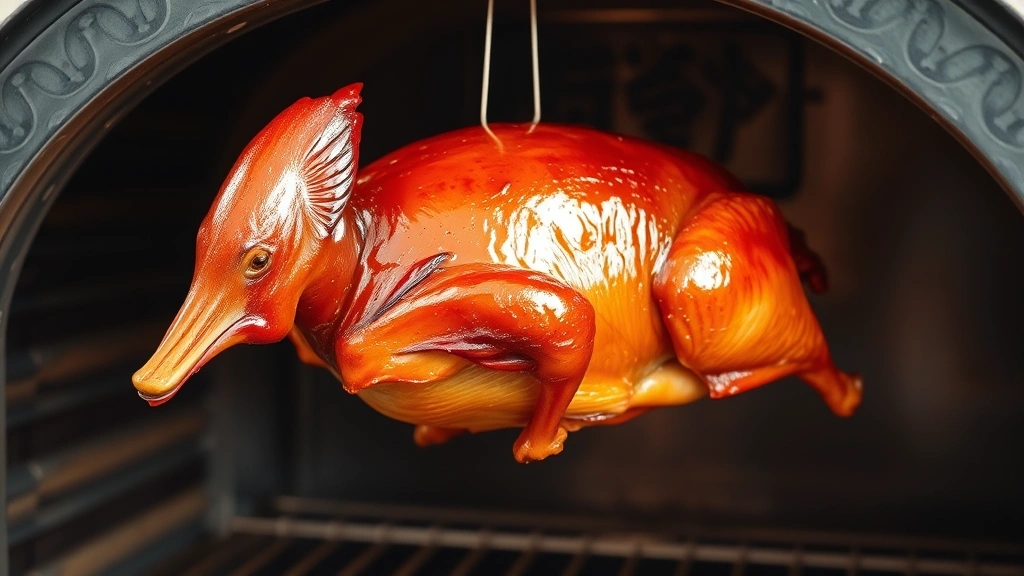
The roasting phase separates authentic preparations from approximations with startling clarity. Traditional Peking duck roasts in specialized ovens—typically wood-fired or coal-fired installations that create specific heat distribution patterns. These ovens reach temperatures between 200-220°C (390-430°F), but the heat distribution differs fundamentally from conventional modern ovens.
The roasting process typically lasts 45-60 minutes, though timing varies based on duck size and oven characteristics. Throughout roasting, the duck’s position may be adjusted to ensure even heat exposure. Authentic restaurants often employ techniques passed down through generations—subtle rotations, strategic placement within the oven’s hot zones, and careful monitoring of skin color progression.
Temperature control represents the roasting phase’s most critical element. The exterior must achieve sufficient heat to caramelize the glaze and crisp the skin, while interior flesh remains perfectly cooked—pink near the bone, with juices running clear. This narrow window of perfection cannot be achieved through guesswork. Master chefs develop almost intuitive understandings of their specific ovens, recognizing subtle visual cues that indicate optimal doneness.
Modern restaurants sometimes substitute conventional ovens or rotisseries, which may produce acceptable results but rarely achieve authentic Peking duck’s distinctive characteristics. The traditional oven’s heat distribution creates a specific Maillard reaction pattern that influences flavor development in ways difficult to replicate with alternative equipment. Discriminating diners can detect these differences in the skin’s texture, the meat’s color gradient, and the overall flavor complexity.
The roasting process generates rendered fat that drips into collection pans below. Authentic restaurants preserve this fat—it becomes part of the service, used for cooking accompaniments or reserved for culinary applications. This practice reflects nothing wasteful; rather, it acknowledges that every component of the properly prepared duck contributes to the dining experience.
Carving Artistry and Service Standards
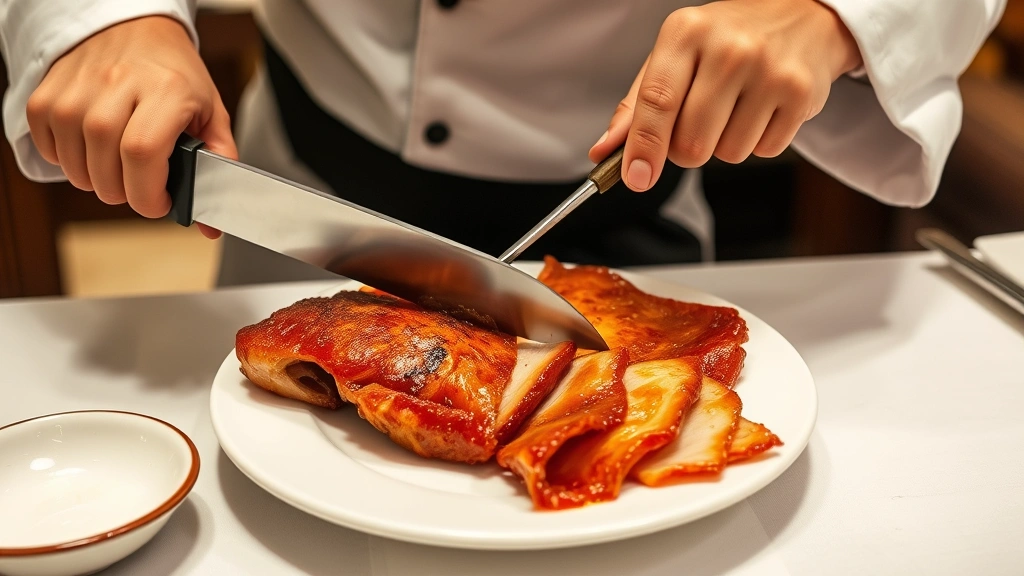
The carving represents Peking duck service’s theatrical and technical pinnacle. In authentic establishments, a skilled carver approaches the roasted duck with specialized implements—typically a long, sharp blade and precise technique refined through thousands of repetitions. The carving isn’t merely functional; it’s performance art that demonstrates mastery and respect for the ingredient.
Authentic carving separates skin from meat with surgical precision, yielding pristine skin pieces that showcase the glossy mahogany exterior and rendered fat layer beneath. The meat follows in carefully cut sections, each piece sized appropriately for wrapping in the thin pancakes that accompany the dish. This precision matters because it affects how diners experience the dish—properly carved pieces ensure every bite contains optimal skin-to-meat ratio.
The carving process reveals the duck’s internal character. Authentic preparations display meat that ranges from deep pink near the bone to pale toward the exterior—a color gradient indicating perfect temperature management throughout roasting. The meat should yield easily to the knife, suggesting proper moisture retention. The fat layer between skin and flesh should appear translucent and completely rendered, not gelatinous or undercooked.
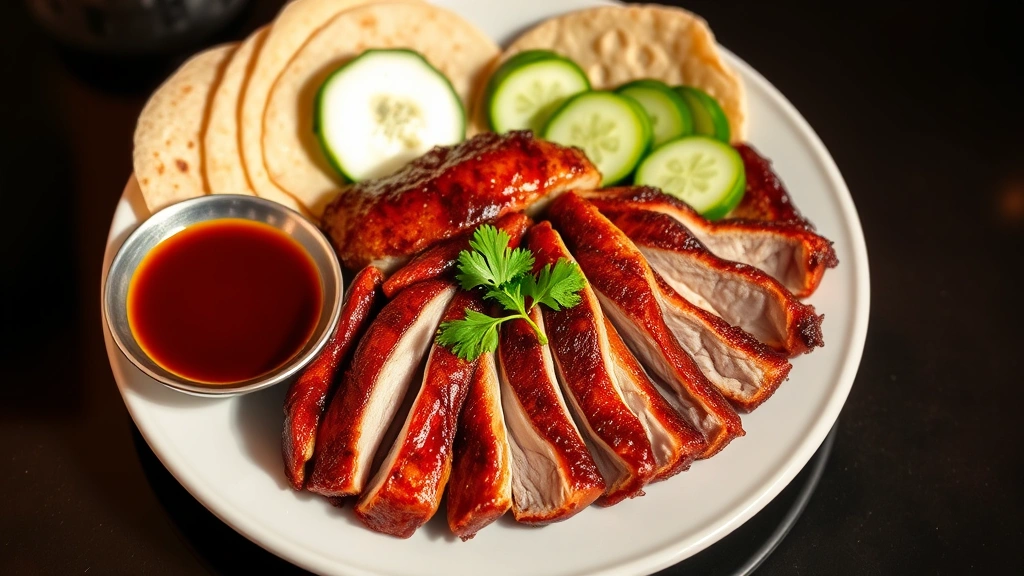
Service of authentic Peking duck involves specific accompaniments: thin wheat flour pancakes (sometimes called crepes), sliced cucumber and scallion, and sweet bean sauce (often called hoisin, though traditional preparations use specific formulations). The sauce deserves particular attention—authentic versions balance sweetness, saltiness, and fermented depth in proportions that complement rather than mask the duck’s subtle flavors. Professional culinary training emphasizes how sauce formulation supports ingredient quality, and Peking duck service exemplifies this principle.
The presentation matters equally. Authentic establishments arrange carved duck on warm plates, often garnished with cilantro or other herbs, with accompaniments positioned to encourage proper assembly. The temperature of serving plates affects taste perception—warm plates keep duck warm, preserving fat fluidity and ensuring optimal flavor delivery.
Flavor Profile Analysis of Authentic Preparations
Tasting authentic Peking duck reveals a remarkable flavor complexity that separates genuinely excellent preparations from mediocre ones. The skin delivers initial sensations: crispness that shatters between teeth, followed by rich, fatty flavors from rendered poultry fat and caramelized glaze. The underlying fat layer contributes subtle sweetness and savory depth.
The meat itself presents different flavor notes depending on proximity to bone. Darker meat near the bone carries more pronounced poultry flavor, with mineral undertones and subtle gaminess. Lighter meat from the breast offers delicate, refined flavors with less intensity but greater subtlety. Authentic preparations preserve these distinctions rather than homogenizing flavor through overcooking or inadequate technique.
The glaze contributes essential flavor components: maltose provides subtle sweetness and umami complexity, vinegar introduces brightness and acidity that balances richness, and any soy-based elements add fermented depth. These flavors should enhance rather than dominate, creating a harmonious whole rather than a single dominant taste.
When wrapped in pancakes with accompaniments, the duck’s flavors interact with cucumber’s fresh crispness, scallion’s sharp bite, and sauce’s sweet-savory complexity. This combination creates a balanced eating experience where no single element overwhelms. Authentic preparations account for these interactions; every component is calibrated to work synergistically.
Aftertaste represents another authenticity indicator. Genuine Peking duck leaves a clean, slightly sweet residue on the palate, with lingering poultry flavors that suggest quality ingredients and proper technique. Inferior preparations leave greasy, one-dimensional aftertastes or unpleasant heavy sensations indicating inadequate fat rendering or poor ingredient quality.
Common Shortcuts That Compromise Authenticity
Many restaurants claiming to serve authentic Peking duck employ cost-saving measures that fundamentally undermine the dish’s character. Understanding these shortcuts helps diners evaluate whether their dining experience represents genuine authenticity or marketing convenience.
Duck sourcing shortcuts: Substituting standard commercial ducks for heritage Peking breeds represents perhaps the most consequential compromise. These alternative ducks may look similar when roasted, but their different fat distribution and meat structure prevent proper texture development. The resulting dish tastes acceptable but lacks the distinctive textural contrast that defines authentic Peking duck.
Preparation abbreviations: Some restaurants skip the inflation process entirely, relying solely on roasting to crisp skin. Without inflation, fat cannot render completely away from flesh, resulting in skin that browns without achieving true crispness. The glaze may caramelize, creating visual authenticity, but the textural experience disappoints. Similarly, skipping or shortening the resting period prevents proper skin transformation.
Oven substitutions: Using conventional ovens, rotisseries, or even sous-vide finishing methods produces results that approximate Peking duck’s appearance while missing its essential character. These methods may yield acceptable roasted duck, but they don’t create the specific heat distribution patterns that generate authentic Peking duck’s distinctive flavor and texture.
Glaze modifications: Some restaurants substitute simple soy sauce or honey for traditional maltose-vinegar combinations. While these alternatives brown the skin, they produce different flavor profiles that don’t align with authentic preparations. The resulting dish tastes sweet or salty rather than balanced.
Carving corners: Pre-portioning duck before service or using inexperienced carvers produces inconsistent pieces that don’t showcase the ingredient properly. Authentic service requires skilled carving performed tableside or immediately before plating.
Understanding these compromises helps explain why some peking restaurants consistently deliver excellence while others disappoint despite claiming authenticity. The shortcuts save time and money—sometimes substantial amounts—but they fundamentally alter the dining experience.
For those exploring other culinary traditions, comparing authentic preparations across cuisines proves illuminating. Understanding how seafood responds to different cooking methods or examining how various preparation techniques affect nutritional profiles develops appreciation for the care required in authentic cooking.
When evaluating a peking restaurant’s authenticity claims, ask direct questions: Where do they source ducks? Do they perform inflation? What type of oven do they use? How long do they rest prepared ducks? Do they carve tableside? Genuine establishments answer these questions confidently and specifically. Restaurants vague about their methods likely employ shortcuts.
The International Association of Culinary Professionals maintains standards that many authentic restaurants reference when discussing their methodologies. Checking whether establishments hold recognized certifications or maintain memberships in professional organizations provides additional authenticity verification.
FAQ
What makes Peking duck different from regular roasted duck?
Authentic Peking duck requires specific duck breeds, precise preparation techniques including inflation, extended resting periods, and specialized roasting in particular oven types. These elements create a distinctive textural contrast—crispy, rendered skin paired with succulent meat—that standard roasted duck cannot achieve. The flavor profile also differs significantly due to traditional glaze formulations and careful temperature management throughout roasting.
Can Peking duck be authentically prepared outside Beijing?
Yes, but it requires significant dedication to traditional methods. Chefs outside Beijing must source appropriate duck breeds, replicate specialized oven conditions as closely as possible, and maintain rigorous preparation standards. Some restaurants worldwide achieve authentic results through this commitment, though geographic constraints and ingredient availability present challenges. The most authentic non-Beijing preparations often involve chefs trained directly in Beijing’s traditional methods.
How can diners identify authentic Peking duck preparations?
Authentic Peking duck displays several visual and textural characteristics: mahogany-colored skin that shatters crisply when bitten, a rendered fat layer visible between skin and meat, meat color that ranges from pink near bones to pale near the surface, and careful carving that yields appropriately-sized pieces. Flavor should be balanced—not overwhelmingly salty, sweet, or greasy—with a clean aftertaste. Restaurants should be willing to discuss their sourcing and preparation methods specifically.
Is it worth seeking out authentic Peking duck preparations?
Absolutely. Authentic Peking duck represents a pinnacle of culinary technique and ingredient mastery. The textural and flavor complexity that emerges from proper preparation cannot be replicated through shortcuts. For food enthusiasts interested in understanding how technique transforms ingredients, experiencing genuine Peking duck provides invaluable education. The cost typically reflects the skill and care involved—genuine preparations represent excellent value for the expertise required.
What should diners expect to pay for authentic Peking duck?
Authentic preparations typically cost more than approximations because they involve sourcing specialized ducks, extended preparation time, skilled labor, and often specialized equipment. Expect to pay premium prices at restaurants that maintain traditional methods. However, comparing cost to other fine dining experiences, authentic Peking duck often represents reasonable value given the technical skill involved and ingredient quality required.
How do traditional preparations compare with modern interpretations?
Traditional preparations prioritize technique and ingredient quality above all, accepting time constraints and equipment requirements as necessary investments. Modern interpretations sometimes adapt techniques for contemporary settings, which can work well when chefs maintain commitment to core principles. However, some modern restaurants prioritize efficiency over authenticity, resulting in compromised products. The best contemporary preparations blend traditional methodology with modern refinements while preserving essential characteristics.
Can home cooks authentically prepare Peking duck?
Home preparation presents significant challenges because traditional techniques require specialized equipment—particularly the oven types that create proper heat distribution. Additionally, sourcing appropriate duck breeds and achieving proper inflation and resting conditions demand expertise beyond typical home cooking. However, motivated home cooks can approximate authentic preparations by understanding core principles and adapting techniques to available equipment. The results may not match restaurant-level authenticity, but the process develops appreciation for the dish’s complexity.